
Reporters Without Borders for N1: Attacks on the media are like a license to kill.
Pavol Salaj, director of the Reporter Without Borders office in Prague, spoke to N1 about the drastic deterioration of journalist safety in Serbia, noting that attacks are becoming increasingly frequent and that trust in the police and prosecution has been severely undermined. Salaj warned that the situation is alarming and that there is a real danger of serious crimes against journalists.

N1: We have been talking for years, and you have been following the situation in Serbia for years. What is your main impression of what has been happening in Serbia over the past few years?
"Well, when I came here, I knew, of course, that the situation was bad. Serbia is ranked 96th out of 180 countries in our World Press Freedom Index. But I have to say that I was even shocked when I heard during this mission in Serbia the stories of journalists, how they walk down the street, how they are pushed and threatened because people, citizens recognize them; they have seen them in propaganda media, labeled as traitors, enemies of the state. Some of them fear for their lives. We met a journalist who said he has received hundreds of threats and no longer believes that the police can resolve this issue.
So, I think the essence of this deterioration is actually two elements. The first is that there is indeed very little or no trust among journalists in the police, as well as little trust in the prosecution, which was something that functioned before the protests, and there was some kind of investigation and some justice was possible for attacks on journalists. So this system is essentially under such pressure from cases and such political pressure that it does not protect journalists at all."
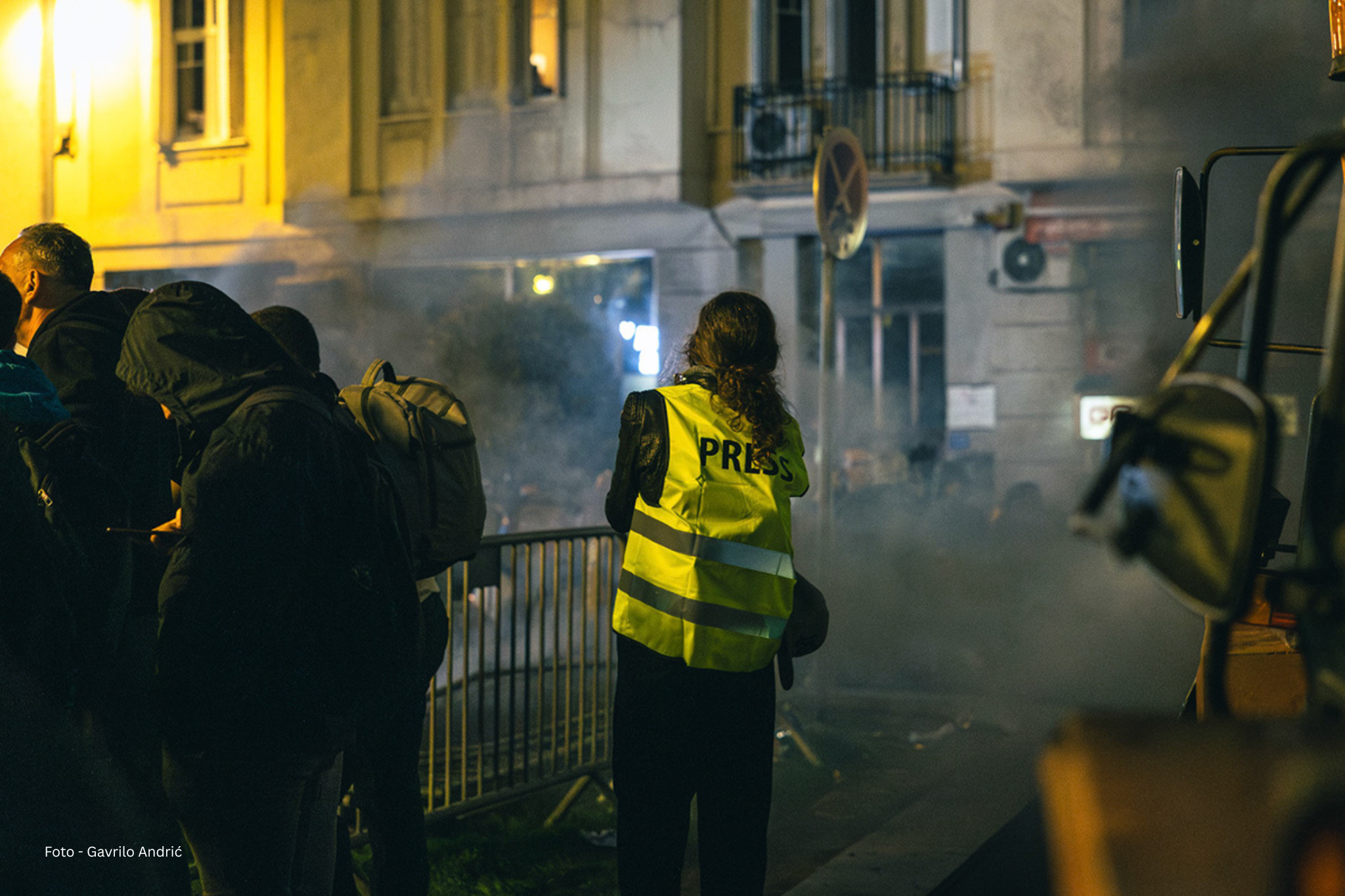
The second problem is that we are really at a very serious moment in Serbia, when all the red lights are on, all alarm signals are activated, and I genuinely fear that journalists will be killed. You know, this is like a situation that may precede a very serious crime against journalists. And we, as an organization, a few months ago, had to send the journalists' association here in Serbia funds to purchase protective equipment, helmets, and vests due to the protests. And we haven't done that for many years in this country.
So, I think our mission is a wake-up call to the authorities that they really need to do something; otherwise, there will be a huge, huge tragedy."
N1: The mission has determined that Serbia is currently one of the worst places for journalists in Europe, but many people in Serbia actually do not know this because it is not reported in pro-government media.
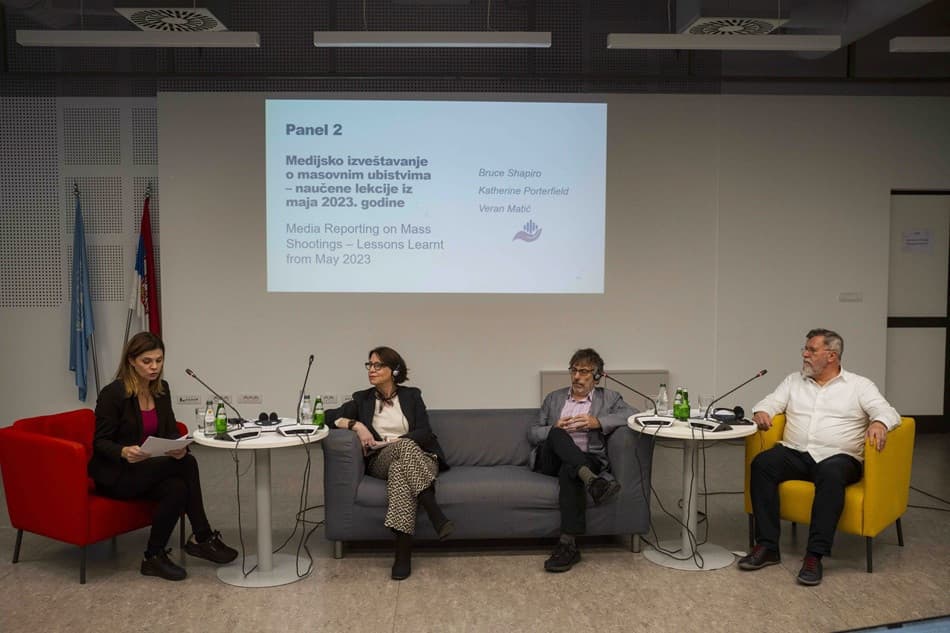
"Yes, I think that even journalists like Veran Matić, who is an advocate for media freedom, you know, who has done a lot to ensure justice for crimes against journalists, today is one of the most endangered journalists in Europe. So I would also like to express support for him.
There are two realities - one is the real world, over 100 physical attacks on journalists last year during protests, a documentary film being aired on several stations in which Veran Matić is threatened with death. And then there is a different reality from state officials who claim that the safety of journalists is not an issue in Serbia and that the main problem may be a few cases of journalistic ethics.
But I think this is now a question of media freedom here in Serbia - a matter of life or death. And we met one pro-government media outlet that also attacks journalists and has also written that, you know, why does the journalists' association need protective equipment? Is it because they are aware of some upcoming unrest? They interpreted it as a provocation. And this is really not something that media should do to their fellow journalists.
And at the same time, these media have asked us for solidarity. Well, I think that solidarity is mutual. So I would also like to call on journalists to respect each other, as well as all media to respect pluralism and journalistic ethics."
N1: During this mission, you also spoke with the police, the prosecution, and, as you mentioned, political authorities. What did you get from them?
"Well, I think that at the meeting with the police, officials denied the irregularities. According to our data, a large portion of physical attacks on journalists during protests, if not the majority, were committed by police officers.
And when journalists were attacked by demonstrators or these organized groups, because there is actually an anti-journalist group that comes to these protests, the police turn their backs on them. So I think that meeting, unfortunately, did not have any concrete results.
With the prosecution, it is different, and I think there is a good system for protecting journalists. You know, they have orders to take these cases very quickly, I think within 24 hours to open a case. But this prosecutorial system is under double pressure. The first is political pressure, and then there is the pressure of the sheer volume of cases, an enormous number of cases, and the slow response or lack of will from the police to investigate and provide information to prosecutors.
So I think the entire system for protecting journalists is deteriorating. Everything that has been built in the past, and everything that Veran Matić and Ana Brnabić have also contributed to in the past.
N1: You also mentioned that the authorities are questioning the ethics of independent media, but do they ask for ethics from pro-government media, tabloids? Do they notice that? Do they talk about it?
"We discussed this at the meeting. We raised this issue. We brought it up at the meeting with those pro-government media as well. But of course, there are violations of journalistic ethics. I think every media outlet should and needs to have, and many do have, mechanisms to rectify those mistakes and to prevent them. And I think pluralism is really, really important.
So more viewpoints in the same media, while maintaining a certain editorial line. But one thing is, let's say, some mistakes or omissions, and another thing is the systematic defamation of journalists, systematic publication of unsigned video recordings that convey death threats to journalists or treat them as enemies of the state.
So these are systematic and organized smear campaigns against critics of the authorities. And no press council can resolve this. This must be resolved by the regulatory body, REM.
However, we know that the REM Council has not been elected. And that is also something we discussed with the authorities. And it is really important for that body to function and to be elected for that purpose in a transparent and effective manner. And to independently oversee that media comply with their legal obligations."
N1: You also met with Ana Brnabić, the President of the National Assembly. She is one of the loudest in verbal attacks on social media against independent journalists. What did she tell you about that?
"Well, we asked her to stop these attacks, and we also asked her to condemn some of the most serious political attacks on journalists. I do not think she committed to that in the conversation. In fact, we tried to explain to her that these political attacks lead to physical attacks and create this atmosphere of impunity. And of course, they are amplified through pro-government media. And they are like a license for murder.
She seemed unaware of the seriousness of the issue of journalist safety and the role that these political attacks play. However, she committed to ensuring that Serbia responds to warnings about media freedom.
We have that platform for journalist safety within the Council of Europe, and we came in that context. On that platform, which is publicly available, we publish those warnings about attacks on journalists or media. And states are required to respond.
Serbia has a relatively low level of response, and Ana Brnabić committed to ensuring that this level of response increases. So that is something positive. She also expressed interest in addressing abusive lawsuits. We call them SLAPP lawsuits. These are legal threats against journalists aimed at intimidating them, or legally harassing them through the courts.
She said she wants to address that, but we tried to explain to her that the issue is also trust. I mean, journalists' associations, civil society, many of them no longer want to cooperate with her and the government because they do not trust them.
So we need her gesture, we told her, to show that she really wants that cooperation and that she takes it seriously. Because, yes, I mean, it is really hard to believe Ana Brnabić."
Source: N1
Related Articles
Journalistic associations provided support to the editorial team of Nova.rs: Ongoing communication and updates with international stakeholders agreed upon.

Coalition for Media Freedom: Stop Attacks and Harassment of Journalists During the Election Campaign

.png&w=3840&q=75)