
In Anticipation of Local Elections: How to Report Safely
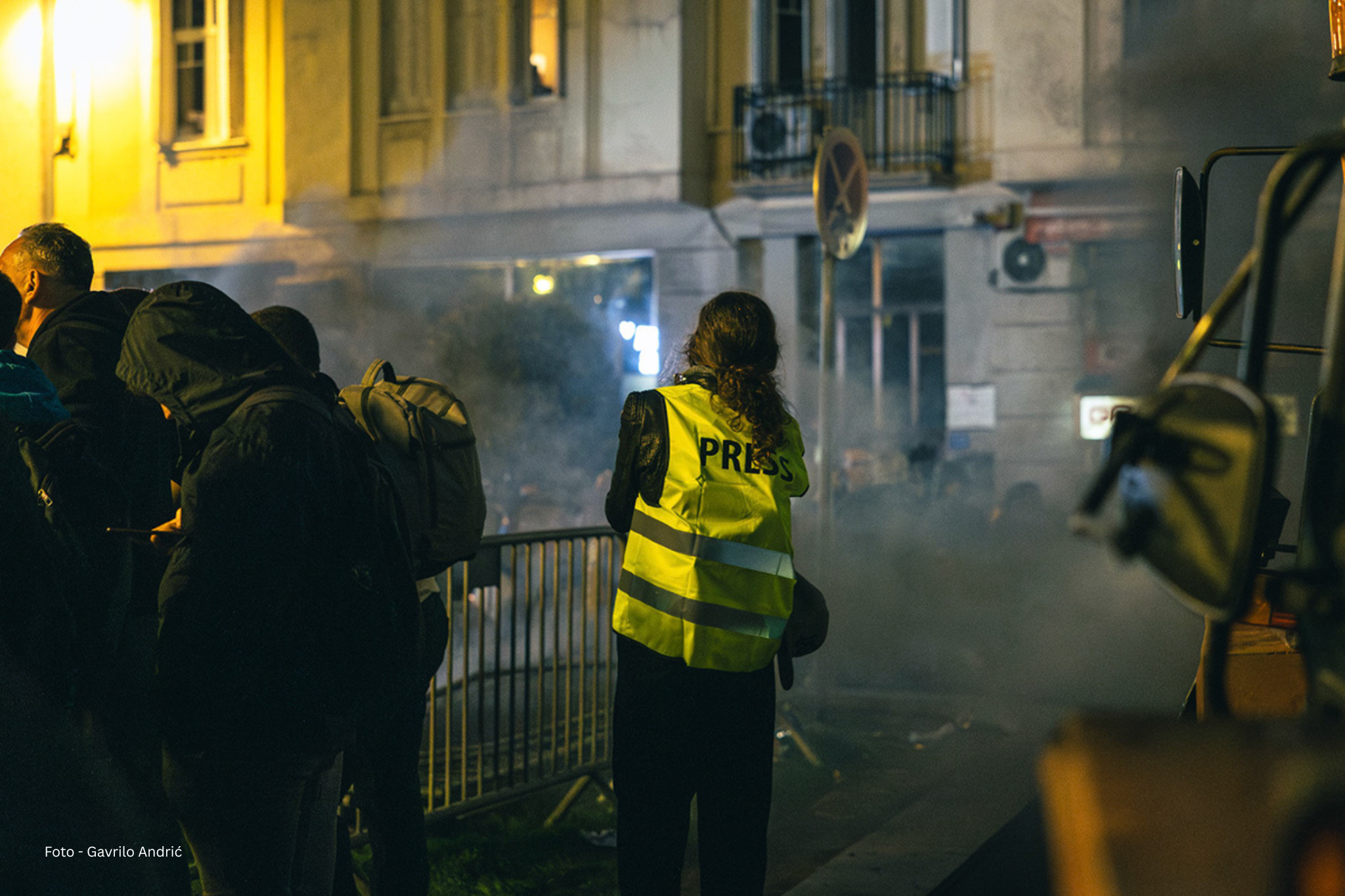
Journalists reporting from war and crisis zones around the world typically wear visible insignia that distinguish them from soldiers and ordinary civilians. This is usually a bright yellow fluorescent vest marked with PRESS, which is visible from almost the Moon. This is designed to protect journalists, preventing snipers from targeting them or aggressors from attacking them under the belief that they are "warriors from another tribe." Furthermore, if a journalist is attacked, wounded, or – heaven forbid – loses their life, the perpetrators cannot claim that it was done accidentally or by mistake. The yellow vest is recommended by numerous international organizations such as the Committee to Protect Journalists, Reporters Without Borders, and international journalists' associations.

However, this is not, at least not always, the best solution. In war, there are military and paramilitary formations that pose a significant problem for the public; they want what they do, which is definitely not in accordance with the Geneva Conventions, to remain in complete darkness. Journalists are actually their enemies, so a yellow vest in some situations can be a greater threat than protection.
In this regard, it is interesting to note the stance of most American war correspondents who, unlike their European counterparts, refused to testify in war crimes courts. They took the position that by testifying, journalists effectively become participants in armed conflicts, at least a posteriori. According to them, testifying in courts further jeopardizes journalistic safety in future wars, as some may wish to eliminate potential witnesses for the prosecution in various courts. They argue that journalists must continually promote their own independence, and that independence and professionalism are, in themselves, a form of protection. They reminded that they have already shared their insights in their reports, even though those insights cannot be deemed relevant evidence in court without their testimonies. They do not want to make the prosecutors' jobs easier.
British and other journalists from the old continent, however, believed that it is their duty, in the interest of achieving justice and the public good, to share their knowledge about crimes and the context in which they were committed with the court. They believe that prosecuting criminals is something that will discourage wars, especially war crimes, in the future, and that this will also make war correspondents safer.
Why the war introduction?
An uninformed person might wonder why there is a war introduction in a text that deals with the safety of journalists ahead of the upcoming local elections in ten municipalities in Serbia. The reality is quite logical, and the answer is simple. The authorities in Serbia, led by the main guru, view politics as a war in which the opponent must be brought to its knees by any means necessary. Every election, even those for local communities, turns into a state of war. Just as paramilitary formations see the public as an enemy during war, they view the public in peace during elections as an enemy, and they likely do not tolerate independent journalists any more than opposition activists and protesting citizens.
Ljiljana Stojanović from the Permanent Working Group for the Safety of Journalists, which consists of representatives from the prosecution, police, and media and journalistic associations, tells us that in such a situation, yellow vests on journalists at protests and during election reporting often represent a red flag for regime activists. It is no wonder, as independent journalists and media have been labeled by the regime in Serbia and its official spokespersons as mortal enemies, foreign mercenaries, and a social danger for decades. This is precisely because they are or can become inconvenient witnesses.
The crisis is intensifying
It seems that the internal political crisis is further intensifying and that this will also reflect on the safety of journalists. There is a possibility that journalists, like other "enemies of the regime," will be under even greater attack this year than last. Especially if parliamentary elections are announced, which the authorities will undoubtedly perceive as a battle for life and death.
Let's recall, last year, the Independent Journalists' Association of Serbia recorded a record number of threats, pressures, and attacks on media workers in Serbia's recent history—at least 383. In 2024, there were "only" 168. There were, of course, attacks on journalists covering elections held in several municipalities in Serbia.
Let’s remember just a few cases. For instance, the attack on N1's cameraman, who was beaten by former police officer and SNS activist Ljubiša Knežević in a village near pre-election Kosjerić during a visit by SNS president Miloš Vučević. During the election period in Kosjerić, the side mirrors were broken and tires punctured on the car of "Vremena" journalist Tijana Stanić, and photojournalist Gavrilo Andrić was physically attacked. In post-election Zaječar, members of the local assembly security physically assaulted local journalist Miljko Stojanović and seized his phone while he was filming a physical altercation between security personnel and council members.
This journalist was targeted in an attack a month later: the head of the Zaječar Police Department physically assaulted him. In Grljan near Zaječar, journalists from the editorial offices of Glas Zaječara, TV Nova, Insajder, and TV N1 were not allowed to report on an event organized as part of the Serbian Progressive Party's election campaign. Numerous threats have also been recorded against journalists covering local elections. And so on, and so forth.
A recent attack on our journalist Vuk Mladenović, who was reporting on the organized departure of Progressive activists to Belgrade for a rally ahead of the local elections in ten municipalities—foretells a fierce week and significant challenges for media professionals who will report from Bor, Aranđelovac, Bajina Bašta, Kula, Knjaževac, Kladovo, Majdanpek, Lučani, Smederevska Palanka, and Sevojno.
What experts say
Thus, the upcoming elections will likely pose a significant challenge for reporters, given that the Progressives have clearly decided they must win at all costs, investing enormous amounts of money and engaging numerous individuals from the other side of the law, who have long become folkloric elements of the electoral process. It has long been a problem that police representatives either threaten or passively observe when others threaten the safety of citizens and journalists.
Ljiljana Stojanović, a member of the Permanent Working Group and editor of Leksovački Jugpress, states in an interview with "Glas Šumadije" that at this moment, after all the attacks journalists have faced while performing their jobs, it is difficult to provide clear and universal advice on how to report safely during local elections.
- Nevertheless, the primary starting point must remain a professional attitude towards work. As much as possible, it is essential to avoid risky situations where a physical attack may occur. At the same time, any sign of a threat, even the slightest, must be immediately addressed and the journalist associations notified—since the public is often the best protection, she says.
Although the police have behaved antagonistically towards journalists in the field in certain situations in recent months, even participating in incidents, she believes that every attack should still be reported to the relevant authorities.
- It is crucial that everything is documented. In the end, as much as possible, it is advisable to work in the company of trusted colleagues, as this can significantly contribute to greater safety in the field, Stojanović tells "Glas Šumadije".
Contact the members of the Permanent Group for the Safety of Journalists!
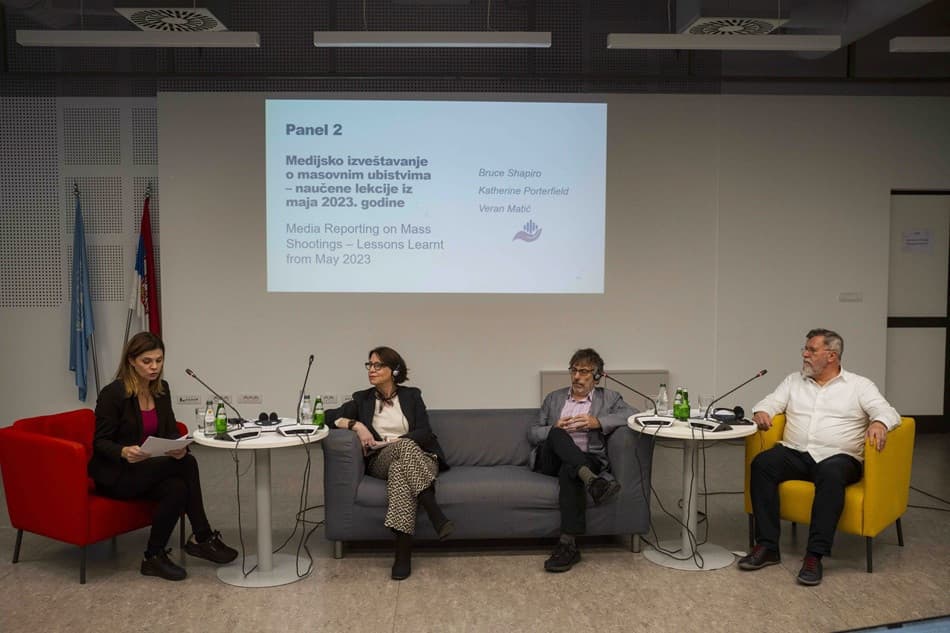
Veran Matić, the playmaker of the Permanent Working Group for the Safety of Journalists and president of the Association of Independent Electronic Media (ANEM), who has recently come under fire from regime politicians and media, calls, in an interview with "Glas Šumadije", for all journalists to contact the members of the Permanent Working Group. There will be one of its representatives present in every place where elections are held, he notes.
- It is extremely important for journalists and teams covering the elections to reach out to us, so we know who is where and can establish effective communication networks. The goal is to ensure a quick and unobstructed exchange of information before, during, and after the election day in cases of (potential) threats to the safety of journalists. We recommend that journalists have protective equipment at hand, move in groups, and always have a colleague who can record and document any incident or attack. In situations where adequate institutional protection is lacking, mutual solidarity and support become essential, says Matić for "Glas Šumadije".
He states that the Permanent Working Group will be in contact with the legal teams of the SHIELD project, Civic Initiatives, the Slavko Ćuruvija Foundation, as well as with observers from the organization CRTA, with whom they will cooperate and share information.
- It is important that when reporting attacks or threats to the police, you also have professional legal support. It is advisable to wear PRESS vests and prominently displayed IDs, and in any risky situation, clearly state that you are a journalist. In the event of an attack by unknown individuals, contact the nearest police officers. The most important thing is to avoid violent situations—move to a safe distance where you can often have a better view of the events. If you receive an assignment that may put you in danger, you have the right to refuse it. As experienced colleague Branko Čečen says—no exclusive is worth a journalist's life, Matić concludes.
Never go out alone!
Journalist from Šabac Isidora Kovačević is one of those local journalists who has gone through a long-term organized torture backed by local authorities and criminal organizations. She moved out of her hometown because she felt unsafe. Isidora shares her experiences in covering local elections with colleagues and our readers. She advises journalists never to go out alone.
- Also, in the case of any suspicious or inappropriate behavior near you, call the police immediately. It is important to avoid entering conflicts and report any unpleasant situation to the authorities. For every obstruction of work, it is necessary to react immediately and file a report so that the incident is documented, she notes.
Source: Glas Šumadije
Related Articles
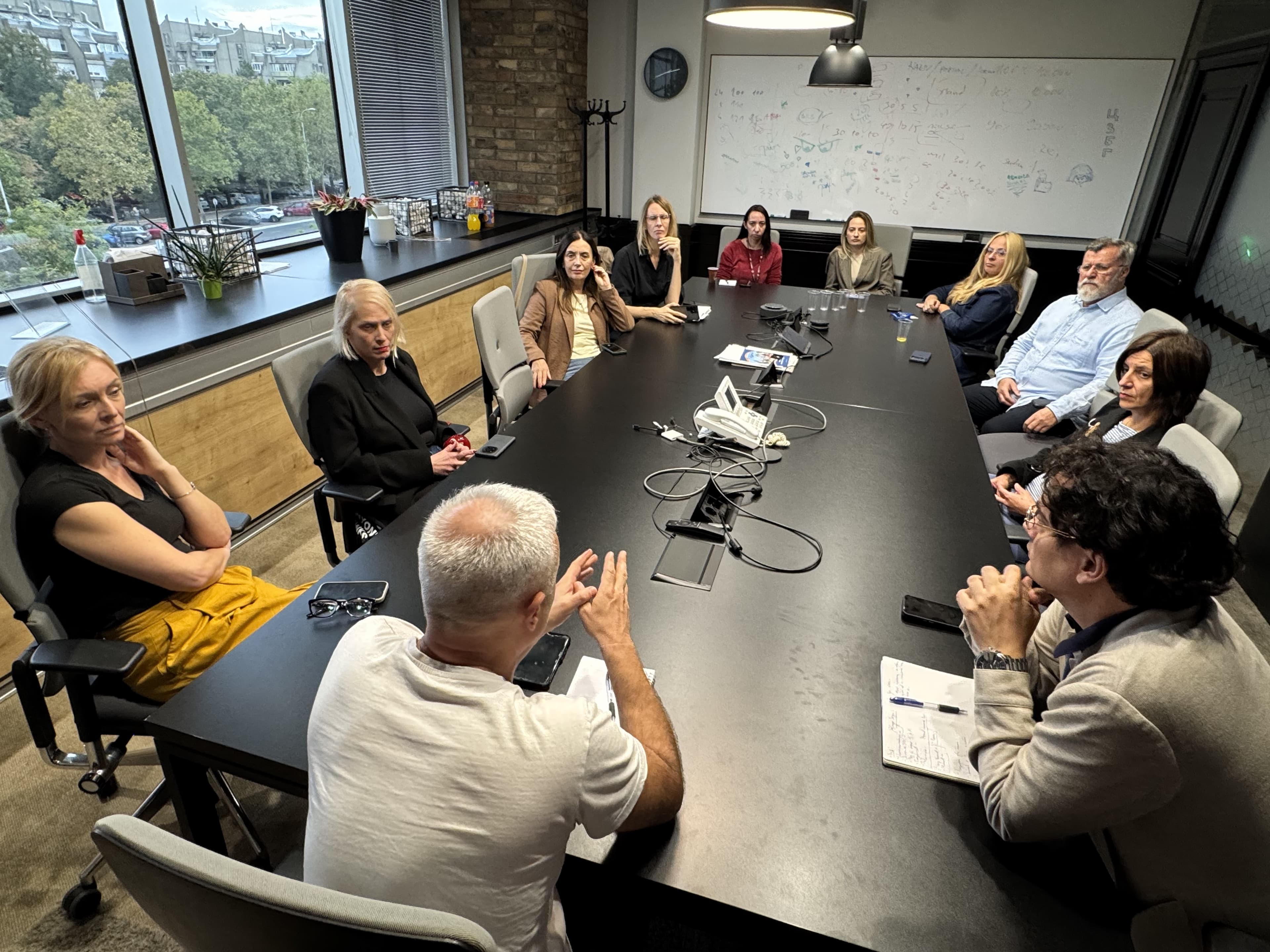
Journalistic associations provided support to the editorial team of Nova.rs: Ongoing communication and updates with international stakeholders agreed upon.

Coalition for Media Freedom: Stop Attacks and Harassment of Journalists During the Election Campaign

.png&w=3840&q=75)