
Veran Matić on Inconsistent Judicial Practice: Journalists Completely Unprotected from Government Propaganda
The Basic Court in Novi Sad has rejected the proposal for a temporary measure to prohibit the publication of claims from the propaganda film by the Center for Social Stability, in which falsehoods about Veran Matić are presented, labeling him as a "traitor and foreign mercenary," thereby endangering his safety, announced the Association of Independent Electronic Media (ANEM).
As reported by ANEM, Judge Srđan Pupović issued a first-instance ruling rejecting the request with a justification that deviates from the established practice of the Basic Court in Novi Sad without a clear reason.
“It also deviates from the practice of the Higher Court in Belgrade, which, like the Basic Court in Novi Sad in another proceeding, defended the freedom of expression with the position that the whole should not suffer censorship due to the claims present within it. Judge Pupović states that the interim measure cannot be enforced because 'there is no connection between the aforementioned claim and the proposed interim measure, since the interim measure does not seek a ban on broadcasting or rebroadcasting the disputed documentary film "Evil Era 2 – The Creation of Propaganda" (…) but only the use of certain claims from that film (…)'. The judge believes that the interim measure requested in this manner 'could not be enforced',” the statement reads.
Interestingly, however, in the case of the lawsuit filed by TV N1 on behalf of journalists Jelena Obućina and Željko Veljković against the same defendant – the Center for Social Stability, and for the same matter, the court issued an interim measure prohibiting the use of precisely the statements from the show discussing those journalists, indicating that the interim measure 'achieves the purpose of securing the claims of the plaintiffs,' according to ANEM.
“The Higher Court in Belgrade, in one case involving the request for an interim measure prohibiting broadcasting, noted that 'the plaintiff did not provide specific information (…) whose prohibition of publication is being requested.' By seeking a ban on the publication of 'texts in their entirety', it was stated: 'it would limit the freedom of public information and would constitute media censorship,'” ANEM notes, adding that Veran Matić, for all the aforementioned reasons, will appeal the ruling.
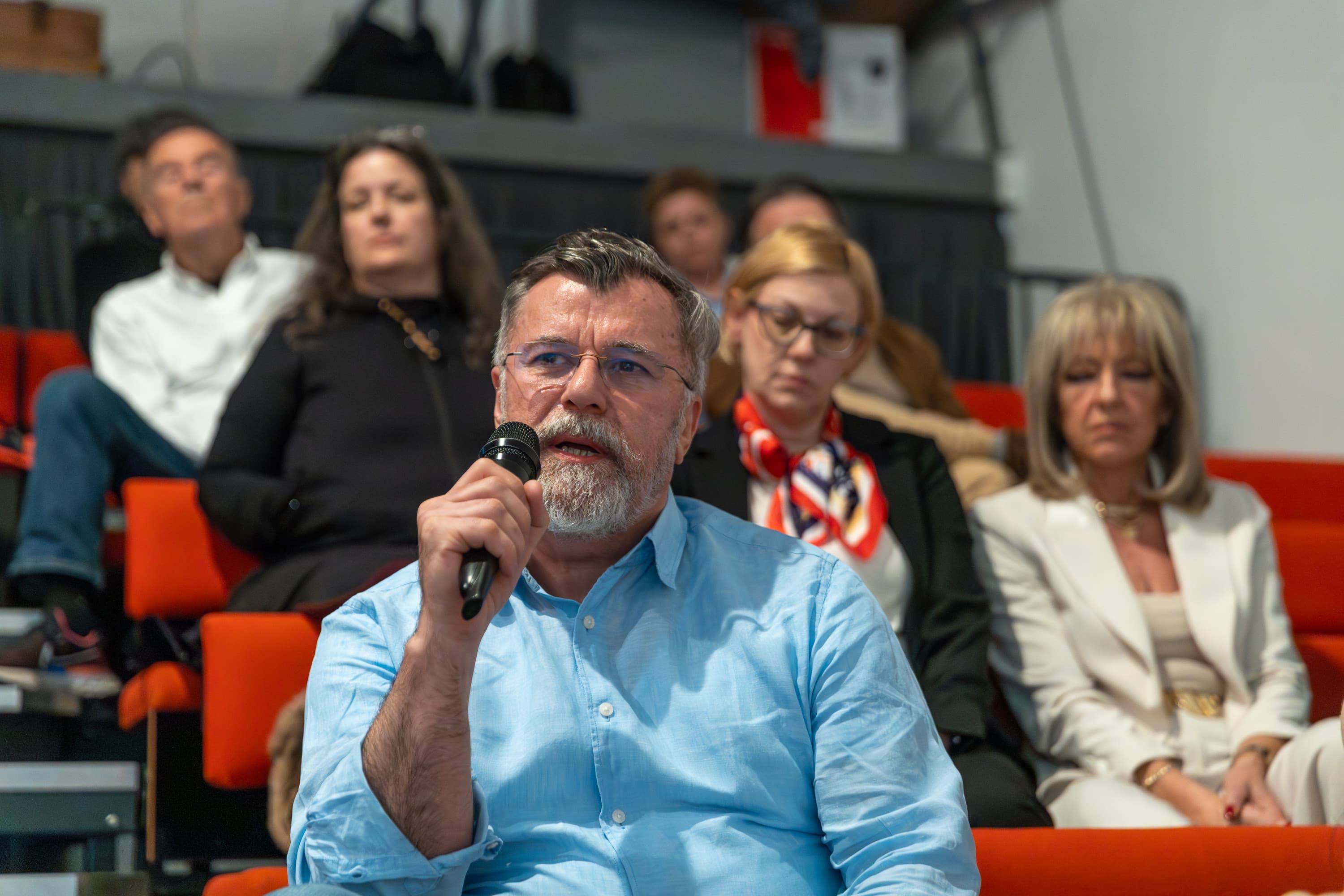
Matić, who is also the president of the ANEM Board, tells our publication that the courts, as well as the judges themselves, are largely polarized, and that decisions are made accordingly.
– We wrote the lawsuit and the request for an interim measure in accordance with existing practice, first from the Basic Court and the Appellate Court in Novi Sad, and then from the Higher Court in Belgrade. However, it is evident that the acting judge has some of their own practices. Therefore, we absolutely have not had any security for quite a long time regarding the behavior of the judges. We have seen many examples of this so far, says Matić, recalling that the judge ignored the announcement that the Center, in addition to films about 45 journalists and activists, will dedicate the next 90-minute film to him again.
As he emphasizes, all of this indicates that we have been experiencing the behavior of a segment of judges that is quite different from what we had five or six years ago, when there was still a dominant effort to protect freedom of speech and the rights of journalists to perform their jobs in accordance with the Code.
– Now, in the last few years, we have frequent situations where judges side with those who want to imprison journalists and punish them if their lawyers and they themselves are not persuasive enough. This is something that is unacceptable, the interlocutor says.
He recalls what he describes as a paradoxical situation where KRIK was convicted for a text about Bratislav Gašić, who was then the director of the BIA.
– With a justification completely opposite to what the practice is. The justification states that his position requires special attention from journalists and special protection, instead of the reverse, as is the global practice, that politicians in office are obliged to endure harsher criticism than is usually the case for ordinary citizens, says Matić.
Accordingly, Matić concludes, for several years now, journalists in Serbia have been completely unprotected.
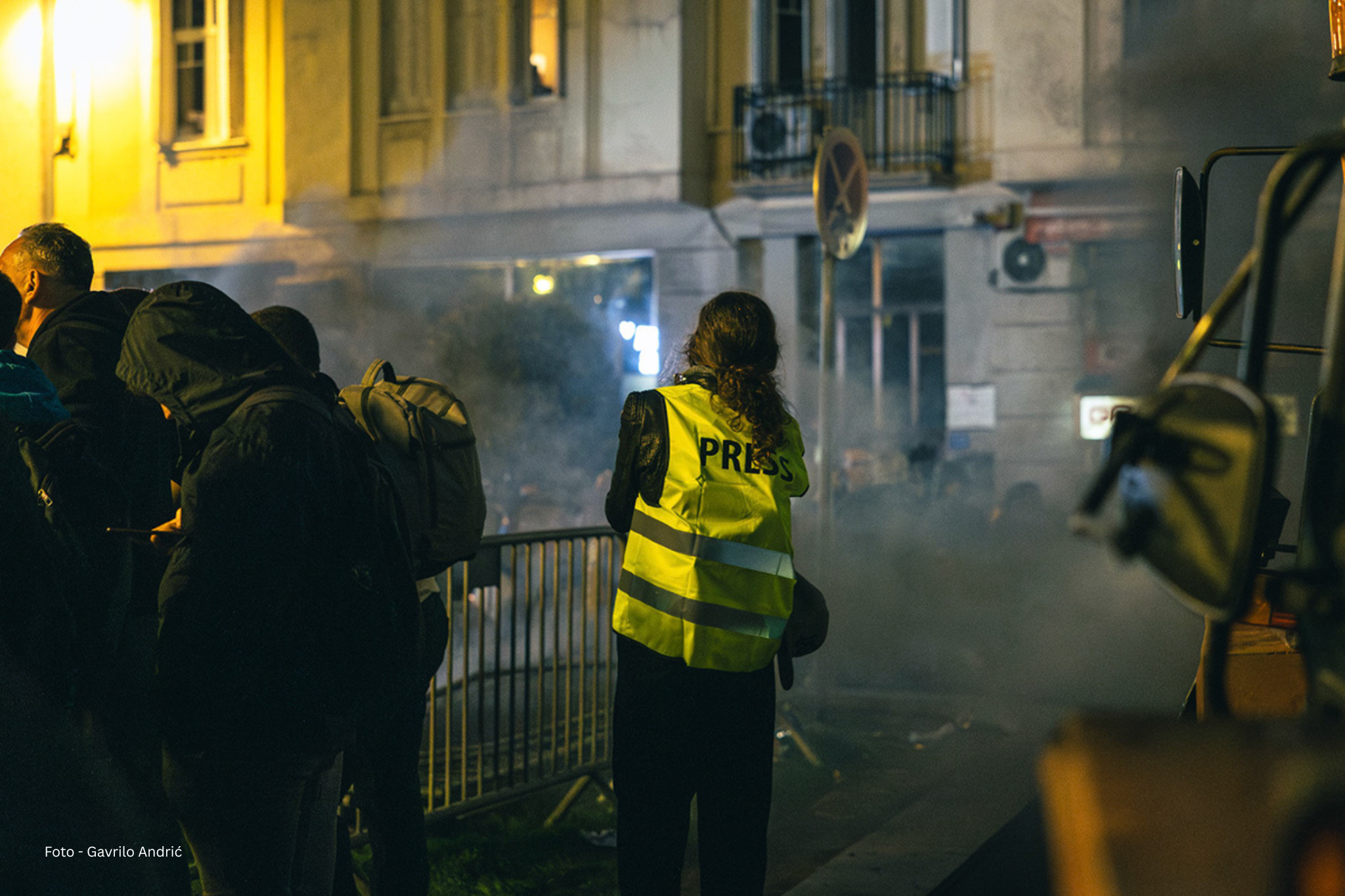
– First, the police have stopped intervening and conducting investigations when journalists are attacked, and then they started physically attacking journalists. Last year, we had four times the number of attacks on journalists, a large portion of which were attacks by the police themselves. Prosecutors largely dismiss criminal complaints regarding the endangered safety of journalists, and then what reaches the court, some judges resolve in a way that suits the government. The most flagrant example is the acquittal of those who had previously been convicted twice to one hundred years in prison in the case of the murder of Ćuruvija, where the Supreme Court itself established that the appellate panel issued a ruling in violation of the laws, and that court records were falsified. And now, after that Supreme Court decision, it is impossible to do anything to provide satisfaction to the victims. What is happening is the opposite, that those who have been acquitted are suing the foundation established by the children of Slavko Ćuruvija. A complete inversion of reality in Serbia, Matić reminds us.
He emphasizes that this targeting of independent journalists and media comes from the top of the government.
– These are messages from the president, the speaker of parliament, government members, and the minister for information who comes from an extremely right-wing party, and now suddenly plays the role of a European ambassador in performing his function, saying that we are on the European path and that we need to align our laws with European ones. This is where everything starts, and the tabloids merely execute what is set forth in the most important positions in the country, and this multiplies, and of course, all of this leads to threats and attacks on journalists. Practically, journalists cannot count on any protection; we have to rely on ourselves and our mutual solidarity, to strengthen our ranks and protect each other, Veran Matić is clear.
The newspaper Danas requested a comment from the Center for Social Stability regarding these two opposing rulings, but at the time of publication, we had not received a response.
The Center is also threatening
At the same time, media associations from the Permanent Working Group for the Safety of Journalists (SRG) have filed an amendment to the criminal complaint against the Center for Social Stability due to threats directed at Matić.
Specifically, the Center for Social Stability published threatening messages directed at Matić on social media X and Instagram on March 17 and 18. “If any of you see Veran Matić in the next month or two, tell him that he is not the only (pseudo)journalist who has grown a beard and to be just a little patient – the continuation is coming soon…,” the post stated.
Here, there is a clear reference to a statement by Tomislav Nikolić, made before the assassination of Zoran Đinđić. Instead of Zoran Đinđić, the implication is made regarding a meeting with Veran Matić, compared to a “(pseudo)journalist” who has grown a beard. It is emphasized that only two journalists wore beards and met their end like Zoran Đinđić: Milan Pantić and Slavko Ćuruvija.
Source: Danas
Related Articles

Journalistic associations provided support to the editorial team of Nova.rs: Ongoing communication and updates with international stakeholders agreed upon.

Coalition for Media Freedom: Stop Attacks and Harassment of Journalists During the Election Campaign


.png&w=3840&q=75)