
Veton Suroi: "How to Kill Veran Matić"
The authors of the documentary revealing the great betrayal by Veran Matić overlooked one detail. When he first arrived in Kosovo after the war, he expressed the desire to lay flowers at the graves of Fehmi Agani and Bajram Kelmendi, as well as his sons, Kastriot and Kuštrim. He laid flowers at the cemetery, bowing as a man to a man, as a Serb to an Albanian killed in the name of alleged Serbian nationalism, as a co-activist for freedom, as a personal liberation.
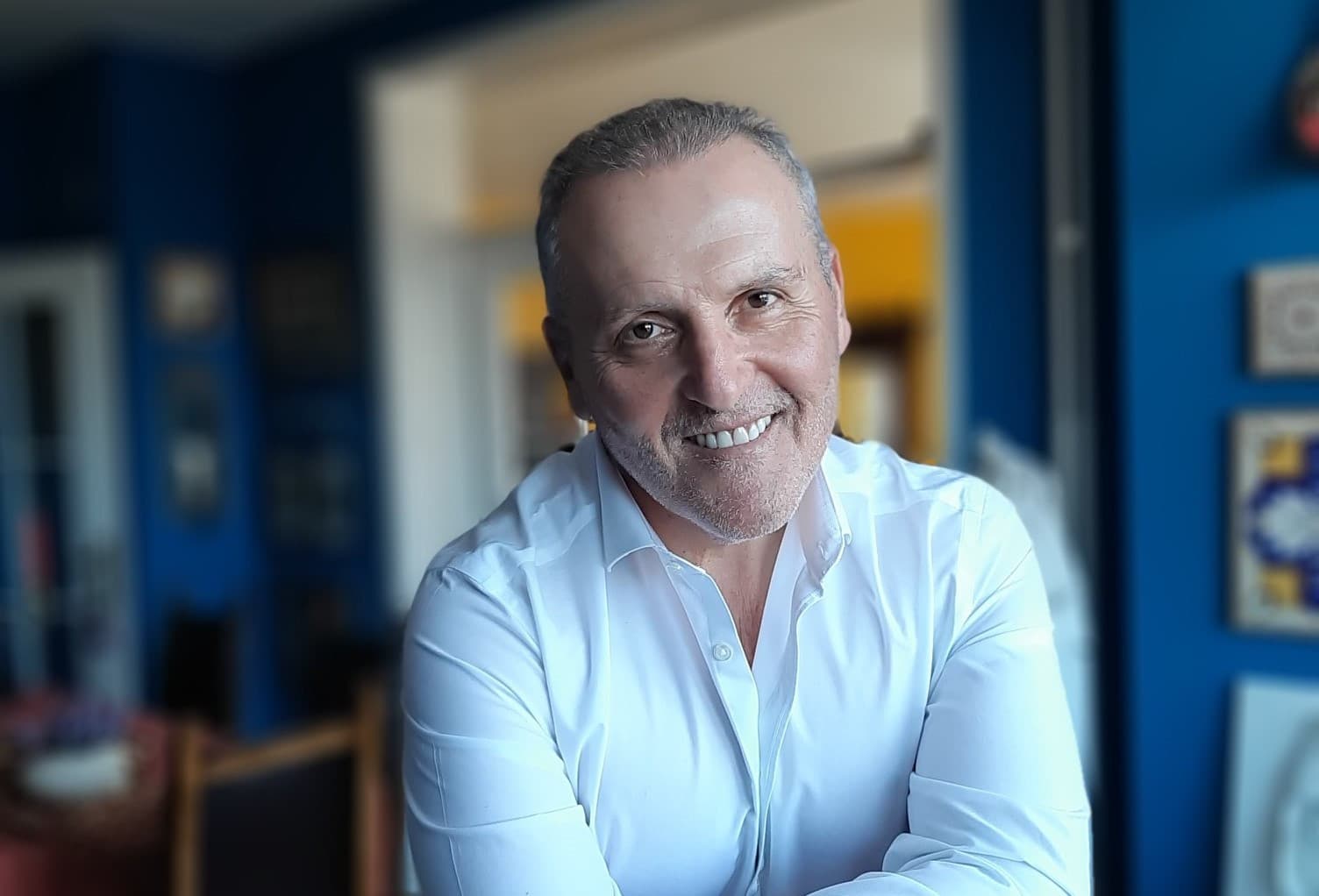
**Written by: Veton Suroi**
**1.**
I watched a documentary that aired on three television stations close to the President of Serbia (there are others, close ones, but these three are, so to speak, proven in their orthodoxy, not Christian but political) titled "Bad Times."
The program explained, with sources that sounded like UDBA files, how since the nineties, an ideologist and operational leader of the entire civil movement against Serbia, Serbdom, and the rule of Milošević, Šešelj, and finally the current president – Veran Matić.
There was no need to display sources in the program – in the traditional style of Serbian secret services, from the Black Hand to the State Security Service – it is enough to say that Veran Matić is the greatest Serbian traitor, and the evidence will come to light one day.
I have known and been friends with Veran Matić for over 30 years (the documentary's authors did not miss this detail, describing me as both his friend and the main promoter of the idea of an independent Kosovo).
There, I was alongside George Soros, the American and British administrations, renowned ambassadors and journalists, as well as Croats and "other anti-Serbian nations," with students and figures from Serbian civil society – a long list of people who must justify why Veran Matić is dead in his Serbdom.
This now serves as preparation for the next death, the physical one.
**2.**
Veran knows this job well.
He was at the helm of the Commission for the Investigation of Journalist Murders for several years, among which the most famous is Slavko Ćuruvija, the owner of the "Daily Telegraph."
After years of work, with the contributions of people in Serbian institutions who wanted to find the truth, his murderers were identified, the chain of command that issued the order was found, and a connection between Mira Marković, the wife of Slobodan Milošević, and the motive for the murder was established.
Mira Marković, during the days of the 1999 bombardment, used more or less the same vocabulary against Ćuruvija that the documentary's authors now use against Matić: elaboration of "betrayal."
(The accused, editor's note) murderers – a typical group of criminals integrated into the Security Service or members of the Security Service integrated into crime, it doesn't matter – were convicted in the first instance. This was a great celebration for independent journalists in Serbia and a victory for Veran. They appealed and were acquitted in the second instance. For Veran, this was a clear signal that the murderers were back on the streets, now freed from any legal or moral responsibility.
**3.**
His work with this Commission is a little-known part of Veran's life in recent years. Although he was one of the leading democratic figures in Serbia during the nineties, particularly dedicated to media freedom and leading Radio B92 as a hub for networking democratic voices, with the election of Vučić as Prime Minister and then President, he positively responded to this latter's call to address the issue of Ćuruvija and other matters that could affect the improvement of relations between Serbia and Croatia, or Serbia and Kosovo.
Regarding Croatia, Veran was responsible for investigating the missing persons in the Croatian war. The number of missing persons in this war remained significant – both Serbs and Croats – and Veran attempted to obtain more information from security services in Serbia, receiving reciprocal responses from Croatian ones, gradually finding the murdered, thrown into unmarked graves.
As for Kosovo, an unexpected case emerged.
During the investigation of the Ćuruvija case, details surfaced that could be linked to the murder of the Bitići brothers.
Ylli, Agron, and Mehmet Bitići were "Albanian-American soldiers of the KLA" who, while transporting their neighbor to the Serbian border after the war, unwittingly crossed into Serbian territory, were arrested, and convicted. After being released from prison, they were executed with a bullet to the head and their hands bound with wire.
For Vučić, whom Veran informed about this discovery, finding the murderers of the Bitići brothers and prosecuting them would signal to Kosovo to try to distance itself from the past, thus he demanded at a press conference that Matić's commission address this issue.
A much greater motive for the Serbian president was that this would begin to fulfill the obligation existing in the relations between the USA and Serbia.
The murder of the Bitići brothers will be, for every American administration, past and future, the murder of three American citizens. For every current and future Kosovo government, the murder of the Bitići brothers will be a matter that will demand resolution for the normalization of relations between the two countries.
Veran explained to me several times the developments in both directions and, sensing my disbelief, told me he did not fully believe it either, but he believed in himself that these things had to be done. Many of our mutual friends saw this with surprise, astonishment, and some even with shame.
Every time he explained this to me, he came with an armored vehicle and two close protection police officers.
In the course of related events, Matić's close protection was revoked, and then the sentence for Ćuruvija's murderers was also lifted. The murderers of the Bitići brothers are also free.
**4.**
The documentary's authors missed one detail. When Veran Matić first arrived in Kosovo after the war, he expressed a desire to lay flowers at the graves of Fehmi Agani and Bajram Keljmendi, as well as his sons, Kastriot and Kuštrim.
He laid flowers at the cemetery, bowing as a man for a man, as a Serb for an Albanian killed in the name of alleged Serbdom, as a freedom activist for a collaborator of freedom; as personal liberation.
Professor Agani and Bajram Keljmendi had a long history of demonization against them before they were executed.
Professor Agani was one of the main ideologists of "Albanian separatism," and Bajram Keljmendi one of the main legal defenders of "Albanian separatists and terrorists."
Those who would shoot at Professor Agani and Bajram Keljmendi already had justification for it. They had it for Kastriot and Kuštrim too – the fact that they were biological extensions of Bajram was sufficient explanation to kill them. After all, even if they were not related, they were Albanians.
Veran Matić tried that day to open a path to a new page in the relations between our peoples, just as he did during Milošević's rule. The authors of the documentary would probably not appreciate this gesture, or rather, it would be yet another proof of his betrayal.
The authors of the documentary are an organization called "Center for Social Stability," a name that seems straight out of Orwell's novel "1984."
The "Center for Social Stability" has identified Serbia's greatest traitor, Veran Matić, a man who has long contributed to social instability.
The logical conclusion is that, in order to preserve "social stability," the next step is now needed, which is approved by one person in Serbia.
**Source:** [Kossev](https://kossev.info/suroi-kako-ubiti-veran-matica/) / [Koha](https://www.koha.net/kolumne/si-te-vritet-veran-matiqi?fbclid=IwY2xjawPskQNleHRuA2FlbQIxMABicmlkETFKSHlGdnZpeDcxTHYxVHc4c3J0YwZhcHBfaWQQMjIyMDM5MTc4ODIwMDg5MgABHnah1jrTlbQlMINdyT-a6-efJXXtv96qzrxMciX1FjgrrGE_k9RwtUGtfQSj_aem_bLEKlMsfsUv7kd2Se4Qwxg)
Related Articles
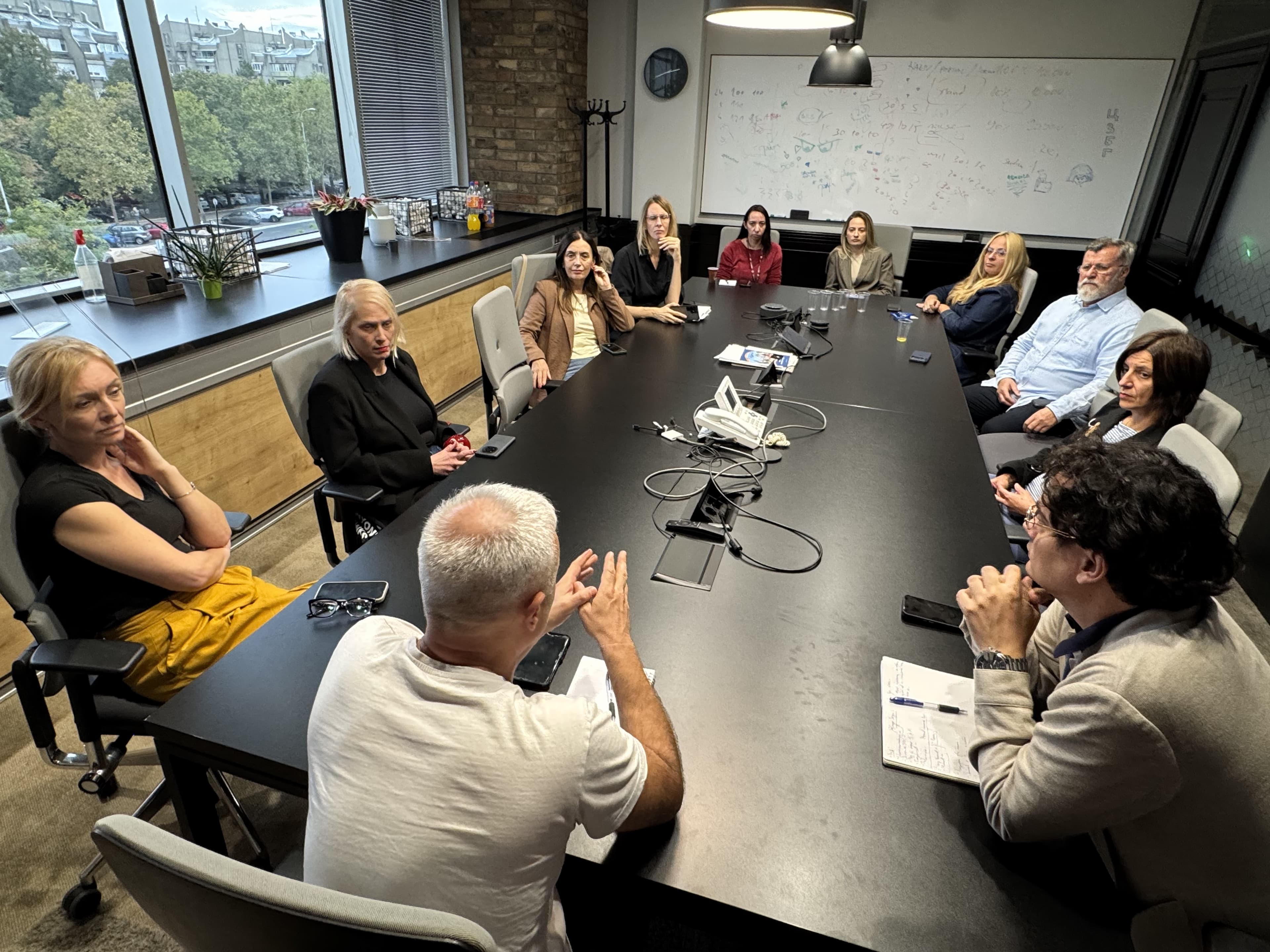
Journalistic associations provided support to the editorial team of Nova.rs: Ongoing communication and updates with international stakeholders agreed upon.

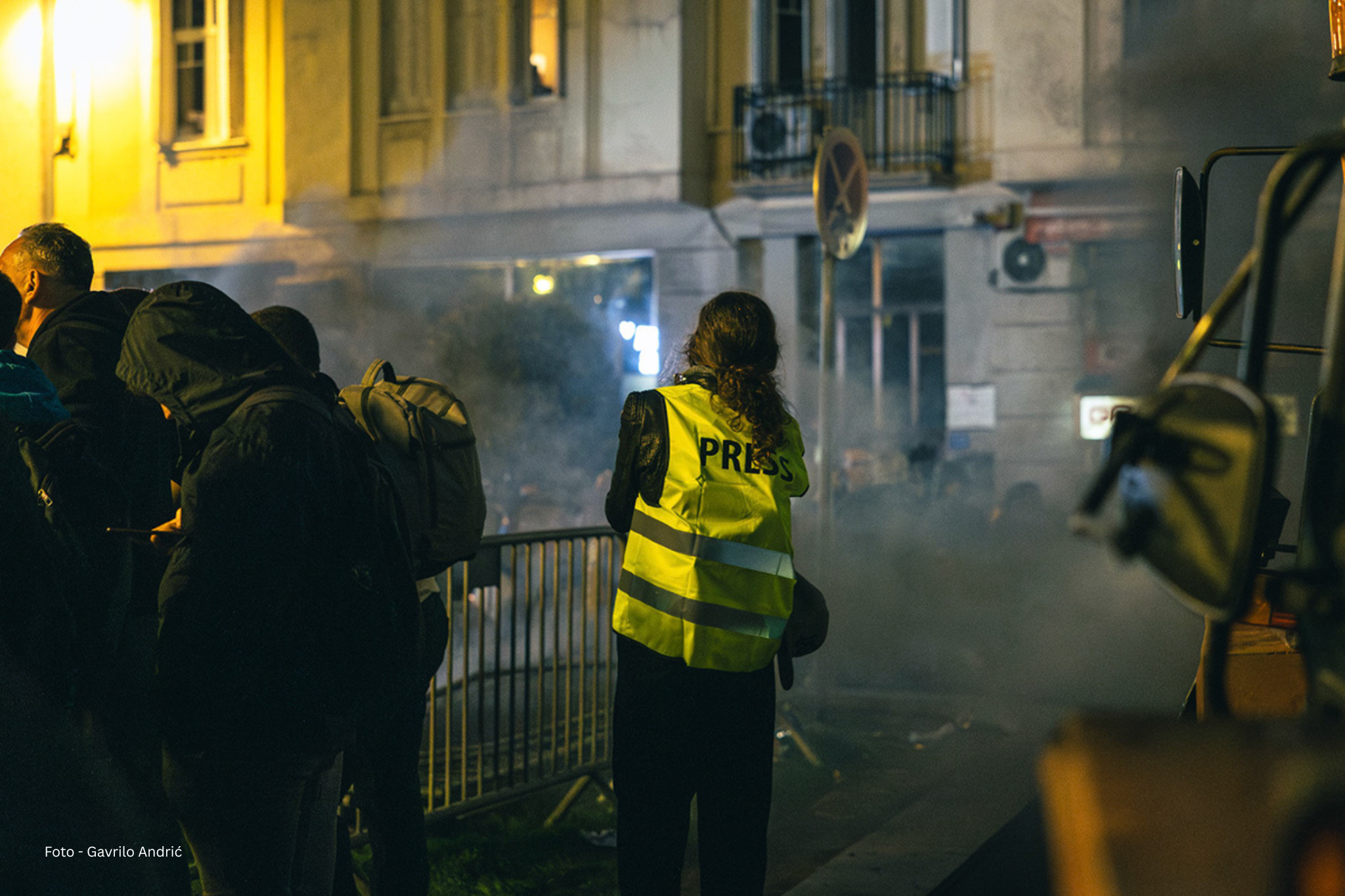
Coalition for Media Freedom: Stop Attacks and Harassment of Journalists During the Election Campaign

.png&w=3840&q=75)