
The authorities in Serbia must stop the spiral of violence against journalists.
Media freedom in Serbia remains trapped in a downward spiral due to record levels of physical violence against journalists, death threats, and online smear campaigns, a concerning level of impunity, as well as strong political control over the media environment, concluded a coalition of organizations for media freedom.
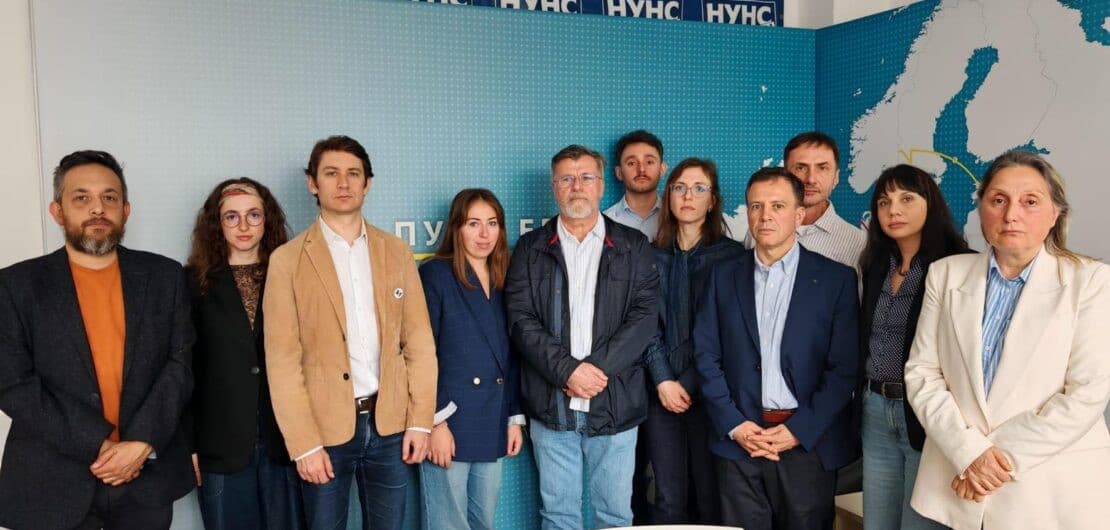
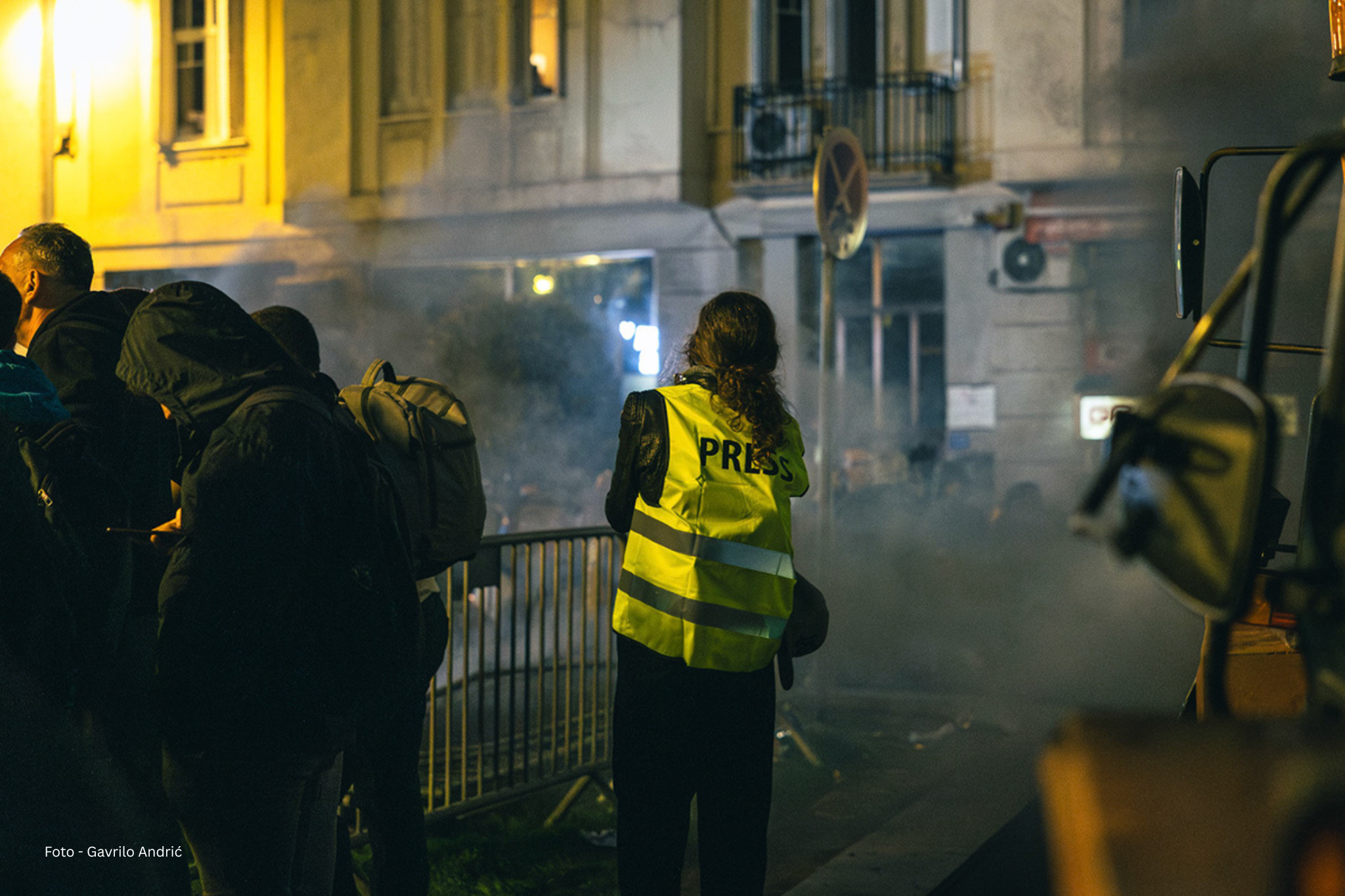
After a two-day mission in Belgrade on March 26–27, partner organizations of the Platform for the Council of Europe’s Protection of Journalism and Safety of Journalists and the Media Freedom Rapid Response (MFRR) initiative assessed that there has been a further deterioration over the past year, leaving the country in a prolonged and deepening media freedom crisis. In the absence of acknowledgment from state officials regarding the seriousness of the current situation concerning the safety of journalists, the delegation warns that the chances for further escalation of attacks on journalists are dangerously high. Numerous reports of attacks on journalists during the coverage of local elections held in 10 municipalities on Sunday, March 29, after the mission, further confirm the delegation's findings. The use of violence to restrict reporting, along with the lack of protection, creates a toxic environment that severely hampers the work of journalists.
The mission was conducted at a time of unprecedented physical attacks on journalists and widespread online smear campaigns led or amplified by influential members of the ruling party. Following the solidarity mission carried out by the MFRR in April 2025, the situation has further deteriorated, despite repeated calls for action. Since the deadly collapse of the railway station canopy in Novi Sad in November 2024 and the wave of protests across the country that followed, the Mapping Media Freedom platform has documented 294 violations of media freedom targeting 513 media professionals and entities. During this period, Serbia was also among the countries in Europe with the highest number of alerts regarding violations of media freedom on the Council of Europe Platform. After meetings with journalists, editors, unions, associations, the Supreme Public Prosecutor's Office, the police, government and parliamentary representatives, media, public service, the international community, and civil society organizations, the delegation expressed concern that journalists are caught in a spiral of violence with very limited protection mechanisms.
The media environment in Serbia is characterized by physical attacks—often perpetrated by those responsible for protecting journalists—verbal threats, including death threats, incitement to violence, and incendiary rhetoric that deepens divisions, as well as pronounced media captivity. Violations extend to the online space; in addition to smear campaigns on the internet, coordinated bot attacks on the accounts of independent media and journalists on social networks, as well as Distributed Denial of Service (DDoS) attacks on news websites, have emerged as new means of censorship. Uncontrolled use of spyware against journalists and media workers, as well as the lack of swift and independent investigations in these cases, remain serious causes for concern that require urgent attention from the relevant authorities. To date, no one has been held accountable for these cases. Widespread violations have been documented through alerts published on the Council of Europe Platform and the Mapping Media Freedom platform, and confirmed through direct testimonies from journalists in print, electronic, and online media.
During a meeting with Ana Brnabić, the President of the National Assembly of the Republic of Serbia, the delegation discussed the state of media freedom in Serbia and urged the authorities to fulfill their increased responsibility as holders of power, to refrain from discrediting, demonizing, and targeting journalists, and to condemn all attacks. Although she stated that she was aware of specific threats to journalists and the sinister legacy of impunity illustrated by the murder of Slavko Ćuruvija, it seemed that this did not encompass the full spectrum of threats directed at journalists, including those coming from the ruling party, which are further amplified by pro-government tabloid media, social networks, and supporters of that party. Ms. Brnabić committed to improving the government’s response rate to alerts published on the Council of Europe Platform. Since the launch of the Platform in 2015, 61% of alerts from Serbia have gone unanswered. The non-response rate in 2025, which coincides with a recorded increase in the number of alerts, was 85%. The delegation welcomed this commitment but reiterated the demand for Ms. Brnabić to halt political attacks and to condemn them when they come from others, as a key first step towards restoring trust in the state's willingness to improve media freedom in the country.
Increased violence against media, spurred by mass protests across the country in response to the tragedy of the canopy collapse in Novi Sad in November 2024, as well as the strong state response that followed, has worsened during 2025 and continues into 2026. The Supreme Public Prosecutor's Office confirmed a 115% increase in the number of cases submitted to it concerning media workers, as well as a 367% increase in cases related to physical attacks. This sharp rise in criminal offenses has been accompanied by a concerning level of impunity. During 2025, judicial authorities issued only three convictions against perpetrators of crimes against journalists. The delegation concluded that a key factor is the continuous erosion of the rule of law, as well as the systems intended to protect journalists in Serbia. The police's insufficiently effective response to requests from the prosecutor's office regarding attacks on journalists leads to a systematic failure to gather enough evidence to initiate criminal proceedings.
The role of the police is crucial to the issue of journalists' safety. However, during meetings with the Ministry of Internal Affairs, the Police Directorate for the City of Belgrade, and the Criminal Police Administration, the delegation was concerned by the lack of any acknowledgment of the seriousness of the problem and the police's shortcomings in protecting journalists and investigating violations directed against them. The delegation was not informed of any cases in which a police officer was held accountable for allegations of unprofessional conduct or failure to respond. Even when specific and well-documented examples were presented in which police officers were perpetrators of attacks, law enforcement representatives did not respond in a manner that would indicate a willingness to learn from these failures and fulfill their legal obligation to protect journalists.
At a systemic level, the delegation expressed ongoing concern over the non-functioning of the Council of the Regulatory Authority for Electronic Media (REM). The absence of a functional and independent REM Council poses a serious obstacle to the effective regulation of electronic media as a whole, as well as to the licensing process. This situation also affects the management of Radio-Television of Serbia (RTS), the public media service, as well as its oversight mechanisms. Considering that the mandate of four members of the RTS Management Board expires in June, and that general elections are expected soon, the absence of a REM Council or any timeline for its appointment will continue to deepen uncertainty regarding RTS and the broader media landscape. During the meeting, Ms. Brnabić expressed frustration over the situation and a desire to find a solution in cooperation with international bodies. The delegation emphasizes that for the process to be credible and acceptable in accordance with Serbian legislation and EU accession mechanisms, the election must result in the appointment of a professional, pluralistic, and truly independent body that acts in the public interest, rather than in defense of political interests. These principles are absolutely non-negotiable for this process.
The spectrum of threats faced by journalists is diverse and complex. Civil and criminal proceedings are increasingly being used against journalists to restrict their reporting, through the threat of costly and protracted legal battles. Data from the National Working Group for the Fight Against SLAPP lawsuits have identified 48 SLAPP cases directed against journalists, editors, publishers, and media since 2020. The investigative media outlet KRIK is currently facing 14 legal proceedings. While larger and more visible media may sometimes respond through public solidarity actions and fundraising via donations for their defense, local media, which are already facing economic difficulties, can find that an abused legal process is sufficient to silence their reporting. The Council of Europe’s Recommendation on Combating the Abuse of SLAPP Lawsuits establishes a detailed framework that enables member states, such as Serbia, to meaningfully counter such lawsuits and protect journalism. Ms. Brnabić pointed to a willingness to address this issue, and these recommendations represent a strong starting point.
Despite the clear data provided by the Serbian judicial institutions themselves regarding the high number of attacks on journalists, a deep discrepancy has been observed between the seriousness of the situation on the ground and the assessment and responses of the relevant authorities following the mission's meetings. Clear political will is necessary to break the downward spiral and ensure that all attacks on the media are adequately sanctioned in accordance with the law. Until this happens, and until political pressures on independent journalism are reduced, media freedom will continue to suffer, undermining Serbia's aspirations for EU membership.
The mission partners will publish a report with findings and recommendations addressed to the authorities in Serbia, which will also be submitted to the Council of Europe, the European Union, and the Organization for Security and Co-operation in Europe (OSCE).
The mission was led by Article 19 Europe, with participation from the Association of European Journalists (AEJ), the Committee to Protect Journalists (CPJ), the European Broadcasting Union (EBU), the European Federation of Journalists (EFJ), the European Centre for Press and Media Freedom (ECPMF), Index on Censorship, the International Press Institute (IPI), the Observatory for the Balkans, Caucasus, and Trans-Europe (OBCT), and Reporters Without Borders (RSF).
**Source: [MFRR](https://www.mfrr.eu/serbian-authorities-must-stop-the-spiral-of-violence-against-journalists/)**
Related Articles

Journalistic associations provided support to the editorial team of Nova.rs: Ongoing communication and updates with international stakeholders agreed upon.

Coalition for Media Freedom: Stop Attacks and Harassment of Journalists During the Election Campaign

.png&w=3840&q=75)