
Five things that marked the media landscape in Serbia in 2025.
In the past year, there has been a drastic deterioration of the media situation in Serbia, evaluated by multiple criteria. Media freedoms in Serbia have been at a concerning level for the past few years, as indicated by numerous international organizations that focus on the protection of freedom of expression and journalism.
The year 2025 was quite stressful for all media workers, and so far there are no indications that it will be better or different in the new year, considering the upward trajectory of the negative trend regarding the safety of journalists, freedom of speech, project co-financing of media content, independent work of regulatory bodies, and competent institutions...
1. Record number of threats, pressures, and attacks on journalists
All evidence indicates that 2025 was a record year for the number of threats, pressures, and physical attacks on journalists, cameramen, photographers, and others engaged in the media. In the database of the Independent Journalists' Association of Serbia (NUNS), over 370 cases of endangerment of media workers' safety were recorded. Moreover, this is not the actual picture, as a large number of threats and attacks go unreported due to fear and mistrust in institutions.
As of the end of November, 117 cases had been opened in the prosecutor's offices, which is 112% more than in 2024. Only two convictions were handed down. In 50 cases, notifications from the police are still awaited so that the prosecutors can proceed further.
The number of physical attacks on media representatives has also increased, with at least 27 reported incidents compared to five in the previous year, according to the prosecutor's records. A promising yet concerning statistic is that the number of online threats has decreased, but they have spilled over into reality, which is much more dangerous. Impunity and inaction by the relevant authorities have led to an increase in threats and attacks that manifest in increasingly drastic forms, becoming much more dangerous.

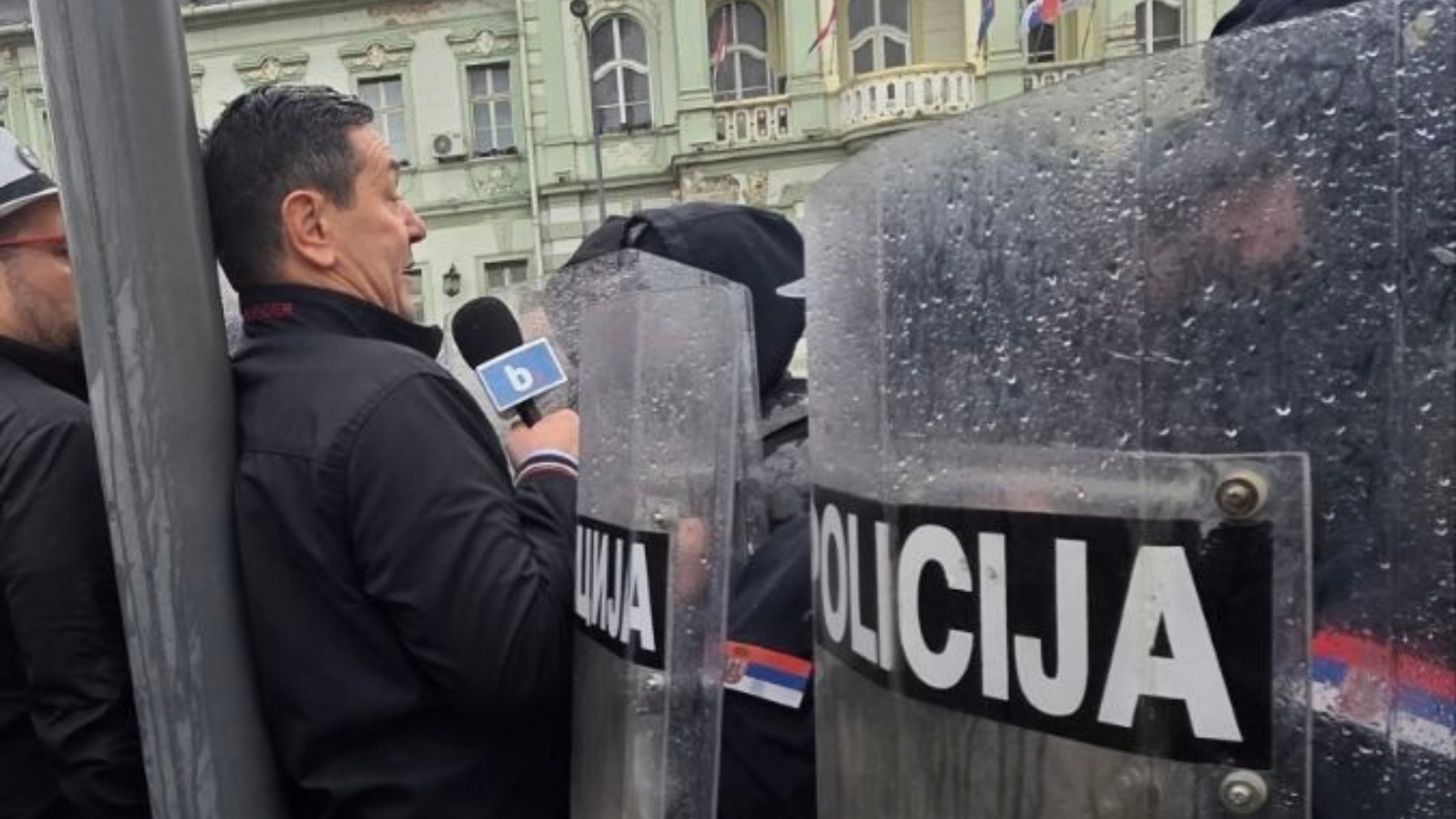
Journalists and media workers were not only attacked by unknown individuals but, in several dozen cases, were also targeted by police officers. They were beaten or otherwise prevented from performing their duties in public spaces.
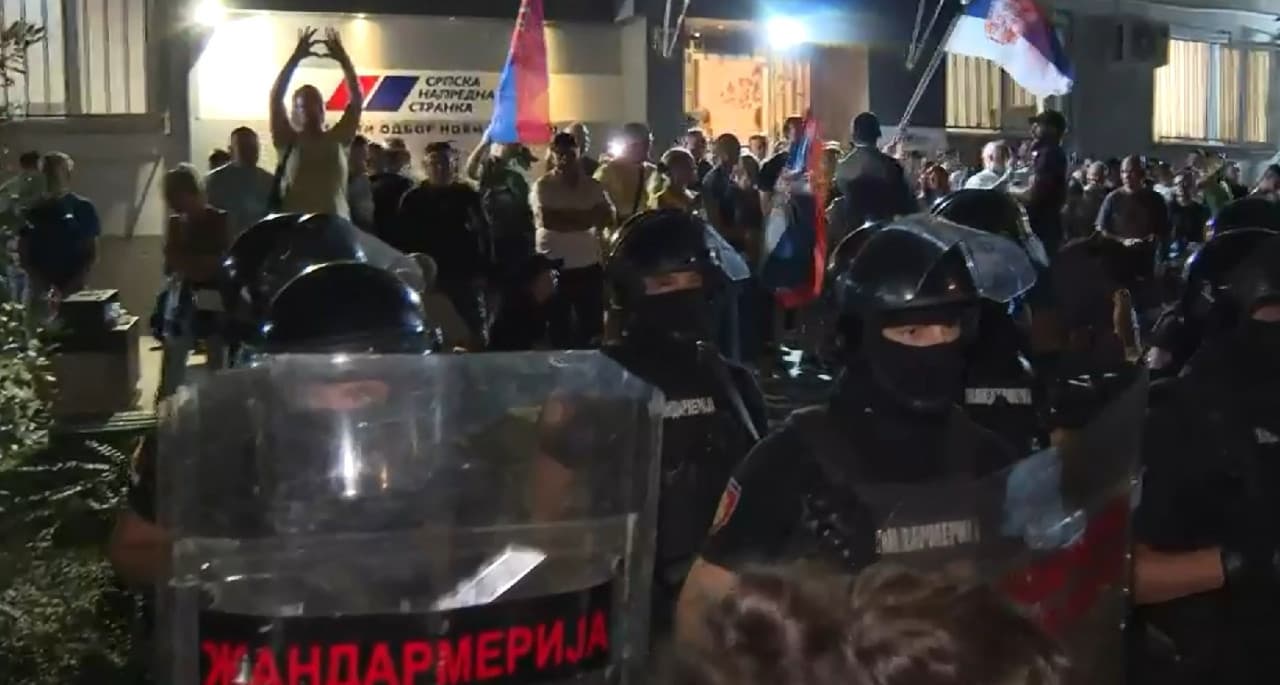
The police passively observed when others attacked media workers, preventing them from working at rallies supporting the SNS (Serbian Progressive Party), as well as in the area between the Serbian Assembly and Pioneer Park, breaking cameras... The police not only failed to respond but also protected the perpetrators in this enclosed and usurped space.
Most threats and attacks occurred following public targeting and incendiary rhetoric from senior state officials, primarily President Aleksandar Vučić... Defamatory campaigns and hate speech continued in pro-government tabloids and television stations, culminating in actual threats and physical attacks.
The Slavko Ćuruvija Foundation registered that numerous state officials attacked journalists and media at least 595 times in their public appearances and on social media over a four-month period.
For more details, see the regular monthly monitoring reports by ANEM on the media scene in Serbia.
2. Project co-financing of media content with a series of controversial decisions
Project co-financing of media content has provoked a series of reactions over the past few years, drawing attention to irregularities, lack of transparency in the processes, and the allocation of funds to media outlets based on a "political key." In 2025, this trend not only continued but the entire process, judging by the results, was rendered almost meaningless.
A certain number of media outlets, mainly those that did not report on student protests, received significant sums of money, often across multiple competitions, while those with a critical stance were generally denied this form of state support. The criteria were not always whether some media adhered to the Code of Journalists of Serbia, as among the winners of the competitions were publications that had numerous violations of ethical and professional standards.
The commissions evaluating the projects consisted of the same members, some of whom were part of over 60 different commissions, so from this year onwards, the number of commissions in which the same person can serve will be limited to "only" 20.

In addition to money being allocated to friendly media, many governing bodies are circumventing legal bases, resulting in five local governments that have not distributed funds at all. These include Preševo, Vrbas, Gadžin Han and Bujanovac. Surdulica did not even announce a competition in 2025 and, as they say, it seems they do not plan to do so and will distribute the funds in some other way.
Journalistic and media associations - ANEM, UNS, NUNS, Lokal Pres, and the Media Association officially sent aligned proposals for amendments to the rules of project co-financing to the Ministry of Information and Telecommunications that would contribute to the transparency of the entire process and reduce opportunities for abuse. Representatives of the Ministry have not responded to this letter so far.
The list of organizations that received the most funds from competitions in 2025 is available at this link.
The list of record holders by the number of participations in project evaluation commissions is available at this link.
The honoraria for commission members are available at this link.
3. A year without the REM Council
Since November 2024, Serbia has not had a formed Council of the Regulatory Body for Electronic Media, which is supposed to oversee whether electronic media operate in accordance with laws and regulations. Over the past year, there have been two attempts to form this body, which currently has only four of the nine members confirmed. The elections for members were marred by numerous irregularities, clearly influenced by political pressure.
The absence of this body has caused two television stations to broadcast illegally on the cable system – Niš TV and TS media, even though a license from REM is required for any program to be aired. How is it possible for such a situation to occur? No one has provided answers so far.
The lack of the REM Council has also led to various legal and civilizational standards being violated in television programs, inappropriate programming being aired, indecent language being used, and hate speech being spread. Although the Monitoring Service regularly publishes opinions on complaints, as long as there is no REM Council, there is no one to impose appropriate measures against broadcasters for numerous violations, the most frequent of which occur on Informer television.
4. Protests against RTS
The death of 16 citizens under a canopy in Novi Sad sparked a wave of mass protests across the country led by students, demanding accountability for this tragedy. Many believe that the public service RTS has not adequately, objectively, or timely reported to the public about events and the crisis in society, leading dissatisfied citizens to protest multiple times in front of this media house, even blocking the building for several weeks.
Numerous employees at RTS joined the dissatisfaction, resulting in disciplinary actions against some of them. Many public and prominent figures called for a boycott of this television station and refused to appear on its programs. This was particularly evident during the Eurovision Song Contest, when several hosts canceled their engagements, as well as some participants. Numerous musicians who did participate sent messages of support to students and the fight against corruption from the stage and during the program. Since the management of RTS deemed this inappropriate, it was decided that Olivera Kovačević would no longer lead the organization of this event.

Although he often appears on its programs, President Vučić is also dissatisfied with RTS's work, and we have seen numerous examples of interviews on that television where he belittles the show's authors and journalists, accusing RTS of being "the same as N1" and "part of the colored revolution."
This year also marks the end of the second five-year term for RTS General Director Dragan Bujošević, and his successor was not chosen in the first competition. We are witnessing a weak response from candidates to the competition, and of all the applicants, only three fulfilled the requirements, including the current president of the RTS Management Board, Branislav Klanšček. In the end, no one was chosen. A new competition has been announced.
5. Turbulence in and around United Media
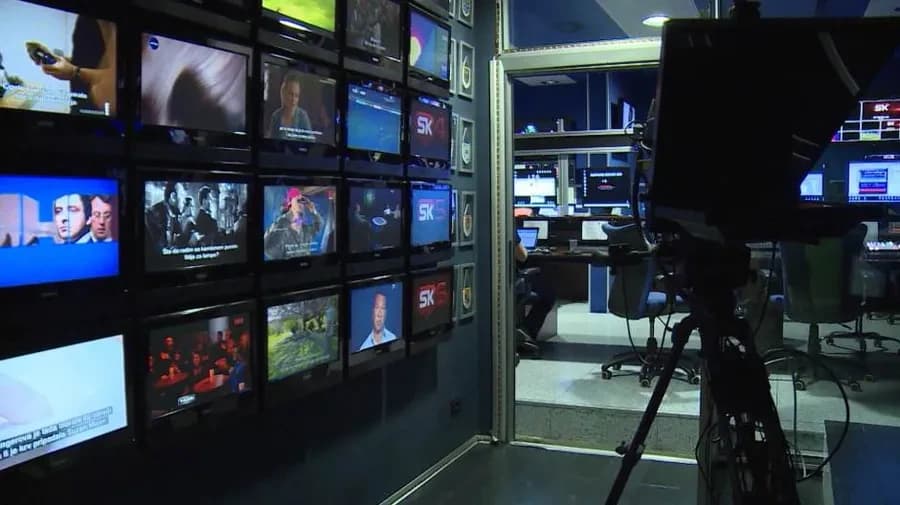
At the beginning of the year, Serbian President Aleksandar Vučić announced the closure of media operating under the United Media group for November. This has not yet happened, but numerous events and turbulence have raised concerns for this media company.
SBB was sold to Yettel, the SportKlub television channel was shut down, and rights were sold to Telekom Srbija. The management of the company dismissed Dragan Šolak and the director of the United Group due to disagreements, leading to legal disputes. Sten Miler was appointed as the new director of United Group, and the public was stirred by a recording in which the director of Telekom Srbija, on behalf of Aleksandar Vučić, demands the dismissal of United Media director Aleksandra Subotić.
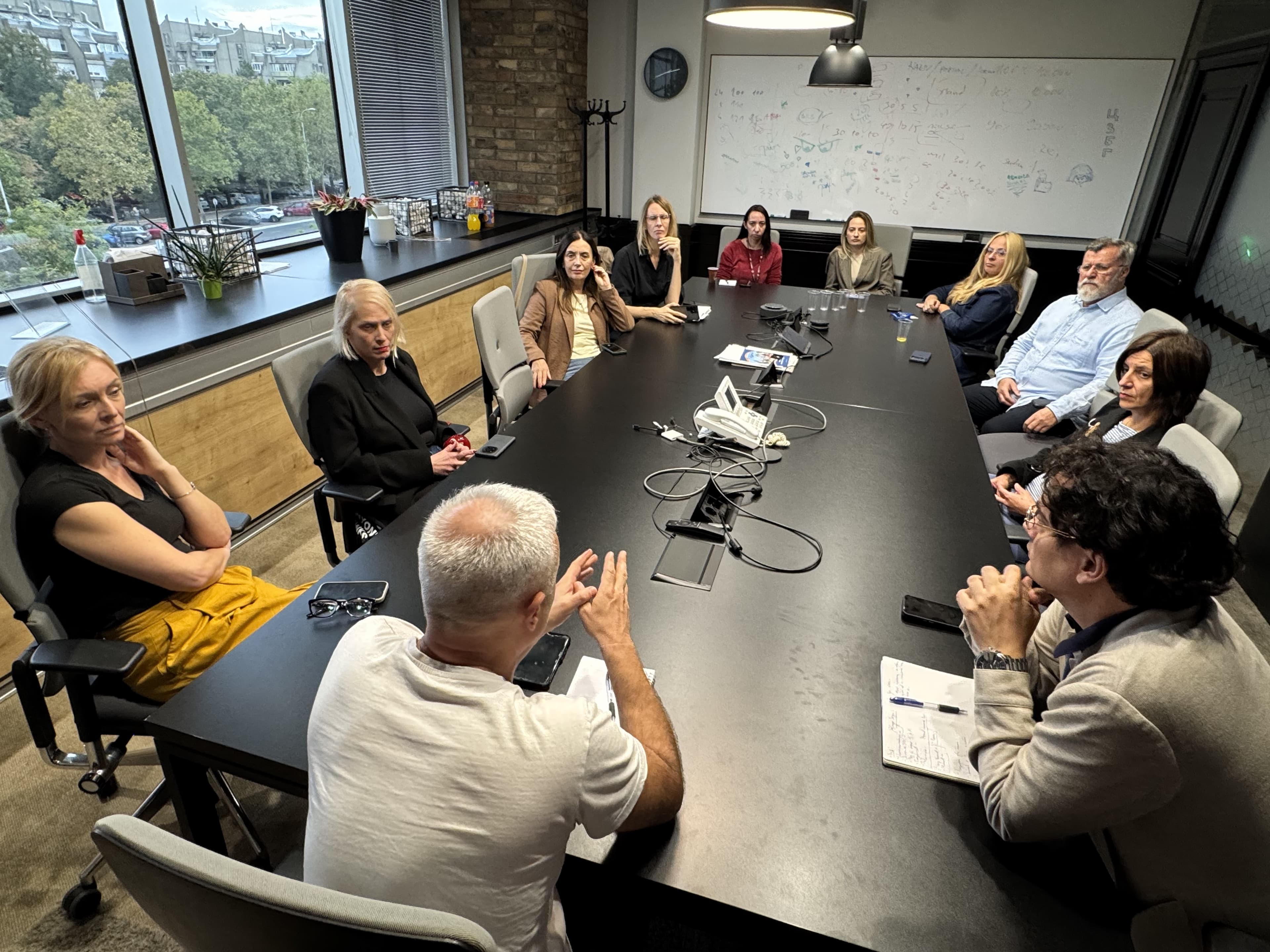
Editors from media operating within this group have repeatedly written to the owners seeking answers but have also offered a "management buyout." Their proposals were rejected.
The public, as well as employees at N1, Nova S, Radar, and Danas, are anxious about what the future holds, considering that a certain reorganization has been announced.
These media outlets, due to their critical reporting, are often targets of threats and attacks, as well as targeting by senior state officials.
Source: ANEM


.png&w=3840&q=75)