
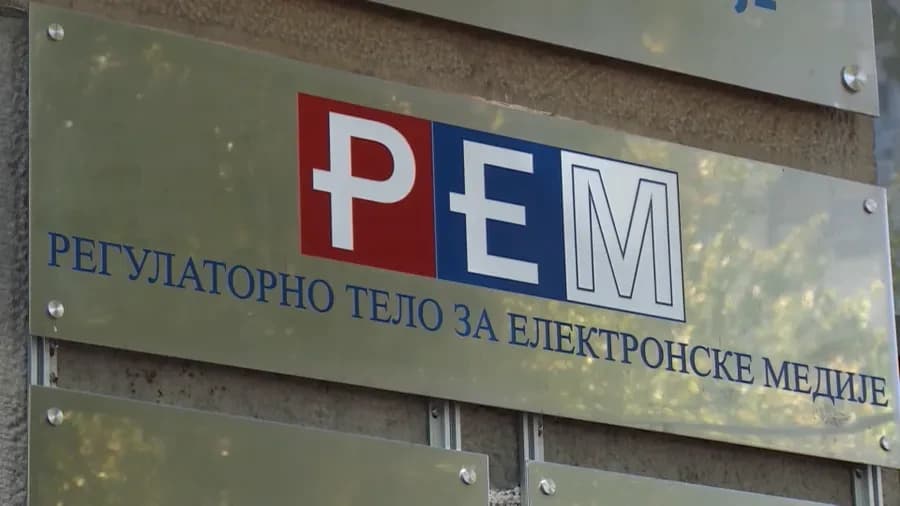
Threat of resignations in REM: Dispute over candidates for national councils has reopened the issue of the legality of the elections.
The announcement of resignations by four newly elected members of the Council of the Regulatory Body for Electronic Media (REM) has once again raised the question of whether the election of this body was conducted lawfully or if it is yet another political maneuver by the authorities to maintain control over the media regulator. Attorney and elected member of the REM Council Rodoljub Šabić claims that the election process grossly violated both the "letter and spirit of the law," while retired professor of Political Science Rade Veljanovski assesses that the threat of resignations is a poor decision that could enable the authorities to secure even absolute control over REM in the future.

Resignations have been "threatened" by Rodoljub Šabić, Mileva Malešić, Ira Prodanov Krajišnik, and Dubravka Valić Nedeljković, and the problem arose during the decision-making process regarding the candidate from the national councils of national minorities.
According to the four elected members of the Council, the issue is that the National Assembly of Serbia did not repeat the voting between the two legally established candidates proposed by the national councils, thereby, they claim, preventing a lawful conclusion to the electoral process and fulfilling the legal condition for the independence of the REM Council.
However, government representatives claim otherwise. Member of the Assembly's Committee for Culture and Information Nebojša Bakarec stated that this committee established a list of two candidates for members of the REM Council proposed by the national councils of national minorities and pointed out that it would be illegal for candidates previously rejected by the parliament to be elected again.
"The Assembly selected eight candidates from 18 candidates, and by law, it concludes the procedure for electing the ninth member from the two new candidates. It would be impossible and illegal to elect two rejected candidates again. One candidate will be elected from the two new candidates proposed by the national councils," Bakarec explained to Tanjug.
Rodoljub Šabić, speaking about the election process for the members of the Council, noted that when it became clear that the Assembly could only choose from independent candidates in five categories, which would ensure a majority of independent members in the REM Council, the authorities resorted to procedures that could be deemed severely illegal, which is why certain non-governmental organizations filed criminal charges.
"In the coordination of candidates in the category of the Council of National Minorities, in addition to representatives of three councils, legal participants in the process, the authorities included another nine representatives from other national minority councils who did not participate in the process and allowed them to vote, thus establishing as a candidate from the outset the favored proposal of the Hungarian national minority council, Ištvan Bođoni," says Šabić.
As the second candidate, the candidate from the Bosniak national minority council was also established, but, as Šabić states, he was an outsider.
"It was known in advance that in this and every category where there is at least one representative controlled by the ruling majority, the Assembly would elect him," says Šabić.
Twelve independent candidates announced through a public statement that if the voting is not repeated and conducted in accordance with the law, with the participation of only three legal, authorized proposers, they would withdraw from the process. The voting was repeated, says Šabić, in a lawful manner, with two independent candidates established, the proposals from the Bosniak and Albanian minority councils.
However, he added that at the very end of the process, during the public hearing of the candidates before the Committee for Culture, just prior to the Assembly voting, the representative of the Alliance of Vojvodina Hungarians, Elvira Kovač, publicly called on partners from the ruling coalition not to vote for any candidates in the election of candidates from the national minority councils, which effectively attempted to obstruct the entire process.
"There was a more than obvious intent to do what could not be accomplished through a failed legal farce with coordination in the repeated process. Although independent candidates publicly warned that this would obstruct the entire process, they went ahead and did it. They presumed political calculations and group or perhaps even personal interests over the general, circumventing the law and sending an ugly, offensive, and belittling message to the national councils of the Bosniak and Albanian minorities," Šabić recounts.
For the REM Council to be legitimate and able to function, it must first be constituted, which includes the election of a president and a vice president. The law requires a two-thirds majority for the election of these two positions, which is currently absent, regardless of whether the ninth member is elected, and if resignations do occur on Friday, then it certainly will not be.
Veljanovski: Resignations of independent members of REM would pave the way for absolute control by the authorities
Professor Rade Veljanovski, a retired faculty member from the Faculty of Political Sciences, believes that the resignations of the four independent candidates would be a very bad decision, as it would allow the authorities to easily establish control over the REM Council.
"This is a bad decision because it is an illusion to expect that the council will be elected in such a way that it will be constructive and that there will be a majority of those who are truly expert and independent of the authorities. As long as Aleksandar Vučić's government and his coalition are in power, that is simply not possible," Veljanovski believes.
Rade Veljanovski assesses that, regardless of whom the ninth member of the Council might potentially align with, it would be unrealistic to expect a favorable outcome, as REM would remain in a poor position in any case.
He warns that if the four members persist in their announced resignations, the authorities could eventually secure not just a simple or two-thirds majority but also an absolute majority in the Council, which would allow them complete control.
Veljanovski adds that in the event of resignations, REM would effectively be blocked and non-functional until new members are elected to replace them.
"If they stayed inside, the council would have a power balance of five to four, and the question would be who would have the edge—those loyal to the authorities or the independent ones. In such circumstances, it would be difficult to elect a president and vice president, but it would still be better if they remained in the Council. After all, they could have made some kind of compromise, so one side could have the president and the other the vice president," Veljanovski states.
Mirković: Without the REM Council, there can be no director of RTS
The election of members of the REM Council is significant also due to public media services. Saša Mirković from ANEM emphasizes that the authorities have failed to implement the Law on Electronic Media.
"Four independent members of REM have tendered their resignations due to disagreements over the selection of candidates from the ranks of national councils. Although the authorities are trying to secure five of their votes, key decisions require a two-thirds majority, and even the potential election of candidate Bođoni would not resolve the existing problem, and dissatisfaction among independent members could escalate into real resignations," Mirković states.
He notes that this could jeopardize the election of the director of RTS, who is chosen by the management board, which should first be elected by the REM Council. In fact, just yesterday, the Management Board of Radio-Television of Serbia decided to re-announce the public competition for the appointment of the general director of RTS, as none of the candidates meeting the competition requirements received the necessary two-thirds majority of votes.
"In June, a new Law on Public Media Services was adopted, which provides for a number of changes concerning public media services, and as a result, the statutes of both RTS and RTV must be amended. For these statutes to be changed, the consent of the REM Council must be obtained, but that council has not existed for over a year," Mirković explains.
Mirković states that we are in a vicious circle, as the election of the general director cannot be valid without the adoption of the statutes, while at the same time there are deadlines that must be respected, given that the current director is completing his second five-year term.
"We will see what the solution will be. I would not be surprised if the situation regarding the election of the general director ends with us getting an acting general director. After that, there will be a wait for the matters related to the REM Council to be constituted, in order to give consent for the statutes, so that the process can be reset and a new public call for the general director of RTS can be announced," Mirković concludes.
Source: Insajder



.png&w=3840&q=75)